
Cozy Bedroom Ideas for a Relaxing Space
369 views
A bedroom can look beautiful and still feel strangely uncomfortable. The bed is expensive, the walls are freshly painted, and there are plenty of decorative cushions—but something about the room never quite says, “Stay here.”
Usually, the problem isn't a missing decoration. It's the way several small environmental details interact: harsh overhead lighting, an overly busy nightstand, cold-looking surfaces, scratchy bedding, exposed cables, too much furniture, or a room that never gets properly dark.
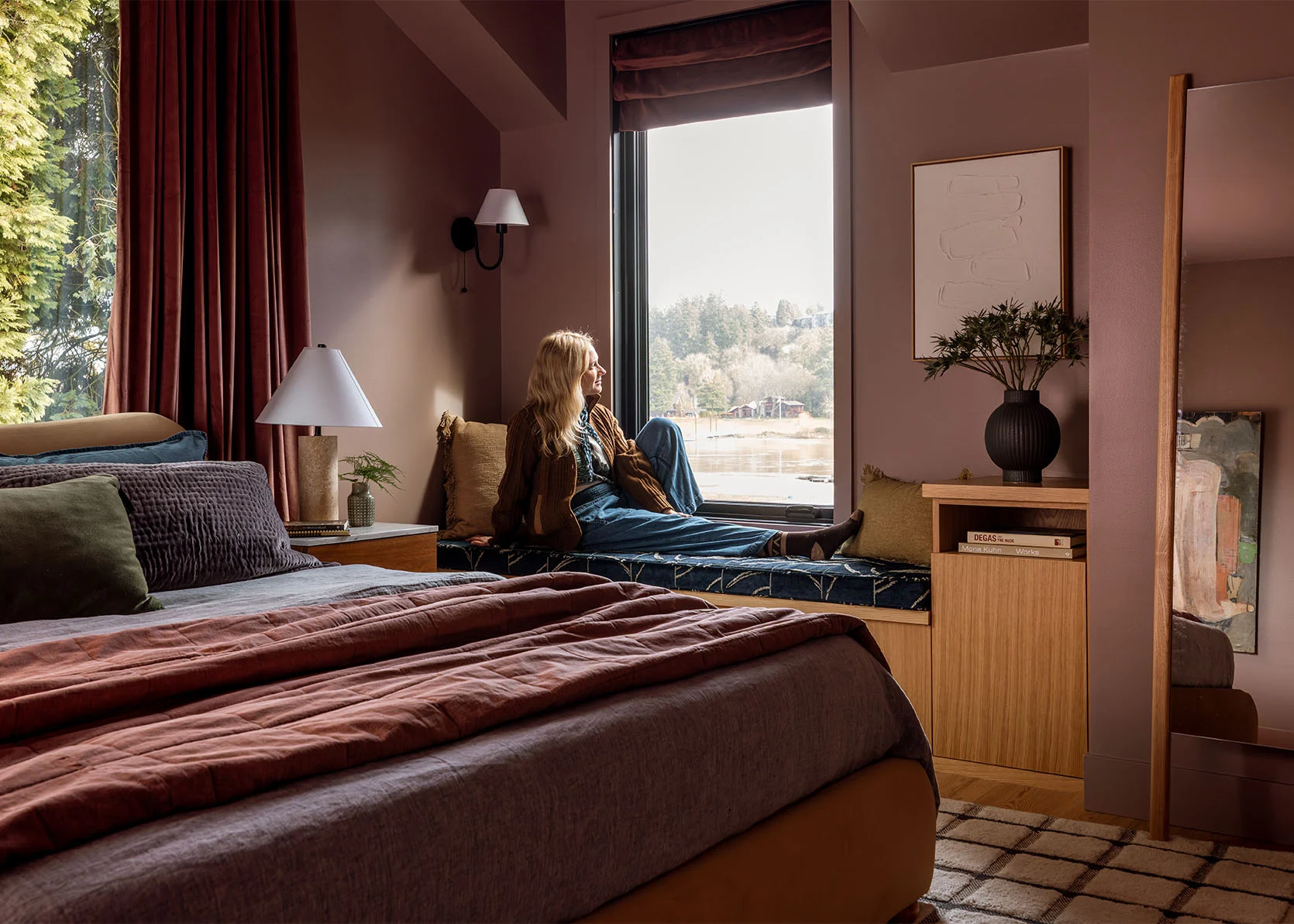
A genuinely cozy bedroom is built through layers of comfort, not a shopping spree.
For Room Trends readers, this is a more practical angle on the current movement toward warmer, softer interiors. The site's 2026 color coverage already points toward warm khaki, soft whites, muted greens, earthy tones, and other less clinical palettes. The next step is making those visual choices work at night, when the bedroom actually has to earn its keep.
Start with the bed, not the decorations
The bed occupies more visual and physical space than almost anything else in the bedroom. Get it right and the rest becomes much easier.
Layer the bed in a way that gives you options rather than simply piling on blankets. A breathable sheet set, a comfortable duvet or comforter, two sleeping pillows, and one or two softer decorative layers are usually enough. The goal is tactile variation.
Think linen against cotton. Woven fabric against smooth upholstery. A quilt folded across the lower third of the bed.
That contrast makes a room feel richer without requiring dozens of objects.
Don't make every textile the same.
A common mistake is buying a complete matching bedding set where the sheets, duvet, pillowcases, cushions, and throw all have identical colors and textures. It looks tidy in a product photograph but can make the bedroom feel flat.
Instead, keep the palette restrained and vary the materials.
If the walls are a warm off-white, for example, try oatmeal linen, muted sage, natural oak, and one darker accent such as charcoal or deep blue-green. Those colors also sit comfortably alongside the warmer 2026 bedroom palette highlighted by Room Trends.
Make the lighting behave differently at night
One ceiling fixture shouldn't have to do everything.
A relaxing bedroom works better with several light sources positioned at different heights. Use a ceiling fixture for cleaning and general illumination, bedside lamps for reading, and a low-level accent light for the period when you're winding down.
This isn't just about aesthetics.
Light exposure in the evening can affect the circadian system, and research on residential lighting has found substantial variation in how strongly people respond to evening illumination. One study of real homes found that nearly half had lighting bright enough to suppress melatonin by an estimated 50%, while individual responses varied dramatically. Greater evening light exposure was also associated with more wakefulness after bedtime.
So don't leave the brightest light in the room blazing while you're trying to relax.
A simple bedroom lighting setup
Daytime: use natural daylight whenever possible.
Evening: switch to lamps rather than relying entirely on the ceiling fixture.
Last hour before sleep: keep the room visually dimmer and favor warmer-looking light.
Bedtime: eliminate unnecessary LEDs, illuminated displays, and stray light from electronics.
Warm-colored lamps are a sensible choice, too. Recent research comparing household lamps found substantially greater estimated melatonin suppression from cool-white LED and CFL lighting than from warm-white sources.
That doesn't mean a warm bulb is a magic sleep treatment. It simply gives you a better starting point for a calmer evening environment.
Use color to make the room feel quieter
Color matters, but the trick is knowing where to stop.
A cozy bedroom doesn't necessarily need beige walls. Soft white, warm taupe, muted sage, dusty blue-green, clay, and earthy khaki can all work beautifully. Room Trends' 2026 color research similarly emphasizes warmer neutrals, soft whites, muted greens, and restrained earthy tones.
For a small bedroom, try a light dominant color and introduce depth through textiles and furniture.
For a larger room, a darker wall can create a cocoon-like effect. Deep blue-green behind the headboard is particularly effective when balanced with pale bedding, warm wood, and low-intensity lighting.
Paint samples are worth the trouble.
A color that looks creamy at 11 a.m. can appear noticeably different under a cool LED at 9 p.m. Put the sample on more than one wall and look at it during morning, afternoon, and nighttime lighting before buying several gallons.
Remove the things that make your brain feel “on”
Sometimes coziness comes from subtraction.
The bedroom shouldn't have to visually process everything you own. Exercise equipment, piles of paperwork, tangled charging cables, open laundry baskets, product packaging, and work materials can quietly turn a restful room into an extension of the rest of the house.
This is particularly relevant if you work from home.
Room Trends has already explored bedroom workspaces and tech-free relaxation zones; rather than repeating those concepts, consider the smaller design problem: what remains visible after the workday ends?
A laptop can be closed. A desk drawer can hide chargers. A small basket can contain everyday clutter. Even a simple fabric-covered storage box beside the bed can remove a surprising amount of visual noise.
You don't need an empty bedroom.
You need a bedroom where the important things are visually dominant.
Give the nightstand a job
A nightstand is one of the easiest places to create accidental chaos.
Phone. Charger. Water bottle. Earbuds. Medication. Books. Receipts. Random cables.
Then someone adds a candle, a decorative tray, a plant, and a lamp.
Suddenly there's no surface left.
Keep the bedside table functional. A lamp, a small tray, a book, and perhaps a glass or water bottle are enough for many people. If you need more storage, choose a nightstand with a drawer rather than increasing the amount of stuff sitting on top.
And hide the cable.
It sounds trivial. It isn't.
A visible charging cable running across a beautiful bedside table can undermine an otherwise carefully designed room because it introduces a small but persistent sense of unfinished business.
Add softness where your feet actually land
A rug doesn't have to cover the entire bedroom.
For many layouts, a large rug extending beneath the lower portion of the bed provides enough visual warmth while creating a soft landing when you get up. In smaller rooms, runners or compact bedside rugs can accomplish much the same thing.
The important part is scale.
A tiny rug floating in the middle of a large bedroom often looks accidental. A properly sized rug anchors the bed and visually connects the furniture.
Texture matters more than pattern here. Bouclé, wool, cotton, jute blends, and other tactile materials can introduce depth without making the room visually loud.
If you have pets, allergies, or simply dislike maintenance, don't choose a rug because it looks luxurious in a photograph. Check how it cleans first.
That's the sort of detail that saves regret six months later.
Control temperature, noise, and darkness
Decor can only do so much if the physical bedroom environment is uncomfortable.
Research on sleep environments has examined factors including light, temperature, noise, humidity, comfort, safety, and smell, and these environmental characteristics have been associated with measures of sleep quality and insomnia symptoms.
Start with the basics.
Use curtains or blinds capable of controlling unwanted outdoor light. If street noise is an issue, heavier curtains can help with the room's acoustic character, although they shouldn't be treated as a substitute for proper soundproofing.
Temperature deserves attention too. A room that feels stuffy under a heavy duvet isn't relaxing just because the bedding looks luxurious.
Experiment.
You might discover that a lighter duvet, breathable sheets, a fan, or better ventilation makes more difference than another decorative pillow ever could.
Noise is trickier. White noise machines are popular, but the research isn't nearly as definitive as internet advice sometimes suggests. A systematic review found highly variable results and rated the evidence for continuous noise improving sleep as very low quality.
If steady background sound helps you personally, fine. Keep the volume modest and don't assume louder is better.
Build a small “landing zone” for the evening
The final 30–60 minutes before bed can influence how the bedroom feels.
Create a predictable visual sequence.
The overhead light goes off. Curtains close. The bedside lamp comes on. The phone goes onto its charger. The bed is ready. A book sits within reach.
Nothing dramatic.
Reducing short-wavelength light exposure in the evening has some supporting evidence, although research on blue-light-blocking interventions is mixed. A systematic review and meta-analysis found some potential benefit but also substantial inconsistency between studies, while a newer review of randomized crossover trials found no statistically significant improvements in several objective sleep measures.
The practical takeaway is less exciting than the marketing claims: dim the room and reduce stimulating screen use rather than expecting special glasses to solve everything.
Small bedrooms can feel exceptionally cozy
A compact bedroom doesn't need to imitate a luxury hotel.
Use vertical space intelligently. Wall-mounted lighting can free the nightstand. Under-bed drawers can replace bulky storage furniture. A narrow dresser may work better than a deep chest. Mirrors can help reflect daylight, but don't cover every available wall simply to make the room appear larger.
Keep the main walkway clear.
This is one of those changes that costs nothing.
Move the chair. Shift the dresser. Turn the bed a few inches if the layout permits. A room can feel dramatically calmer simply because walking through it no longer requires navigating around furniture.
For color, soft warm white or muted neutral walls can keep the room visually open, while darker accents provide depth without consuming much floor space.
Try the “one heavy, one soft, one natural” rule
If the room still feels sterile, add three different physical qualities:
One heavy element: wood furniture, a substantial headboard, thick curtains, or a substantial rug.
One soft element: quilted bedding, velvet, brushed cotton, linen, or a plush throw.
One natural element: oak, rattan, stone, wool, or a carefully chosen plant.
This works because coziness isn't produced by softness alone.
Too much softness can make a bedroom feel shapeless. Too much wood can make it feel hard. Too many decorative objects create clutter.
The combination gives the eye somewhere to rest.
A cozy bedroom doesn't need to look expensive
The most effective changes are often surprisingly ordinary.
Replace a glaring ceiling bulb with better layered lighting. Hide the charging cables. Remove three things from the nightstand. Put a rug where your feet actually touch the floor. Swap one scratchy textile. Close the laptop before bed. Test the paint color at night.
Those changes won't necessarily produce the dramatic before-and-after photograph that sells furniture.
They can make the room substantially nicer to live in.
And that's the standard worth using.
Frequently Asked Questions
What colors make a bedroom feel cozy?
Warm whites, taupes, muted sage, dusty blue-green, earthy khaki, and soft clay tones are strong choices. The key is usually less about one “cozy color” and more about combining a restrained palette with warm materials and layered lighting.
How can I make my bedroom cozy without buying new furniture?
Start by rearranging what you already own. Remove unnecessary objects, improve the lighting, hide cables, change the bedding arrangement, add texture through existing throws or cushions, and make sure the walking paths are clear.
Are warm light bulbs better for a bedroom?
Warm-colored lighting is generally a sensible evening choice because cool, short-wavelength-rich light can have stronger effects on the circadian system. Research comparing household lighting has found higher estimated melatonin suppression from cool-white sources than from warm-white sources.
Should a cozy bedroom be dark?
It doesn't have to be dark all day. Natural daylight is useful during the daytime, while controlling bright artificial and outdoor light at night can create a more restful environment. Blackout curtains, adjustable blinds, or layered window coverings are practical solutions.
How many pillows should be on the bed?
Enough to make the bed comfortable and visually balanced, but not so many that you have to move half the bed onto the floor every night. For many bedrooms, two sleeping pillows plus two or three decorative cushions and one throw is plenty.
Make the bedroom easier to live in
The best cozy bedroom isn't the one with the most candles, pillows, plants, or expensive furniture. It's the room that feels good at 10 p.m. on an ordinary Tuesday.
Start there.
Soften the light. Improve the bed. Reduce visual noise. Control temperature and unwanted brightness. Add a few tactile materials, then stop before the room becomes crowded.
If you change only one thing this week, change the lighting first. Sit in the room after sunset with the ceiling light off and your softer lamps on. You'll know very quickly whether the bedroom is beginning to feel like somewhere you actually want to stay.
cozy bedroom ideas
relaxing bedroom decor
bedroom design inspiration
cozy room ideas
comfortable bedroom design
Found this helpful? Share it!