
DIY Moss Wall Art Tutorial (Bio-Luxe Home Trend 2026)
454 views
A blank wall can make an otherwise beautiful room feel strangely unfinished. You add a print. Too flat. A shelf. Too bulky. A houseplant. Then you’re suddenly negotiating with sunlight, watering schedules, falling leaves, and the one corner where absolutely nothing seems to grow.
There’s another route.
Moss wall art.
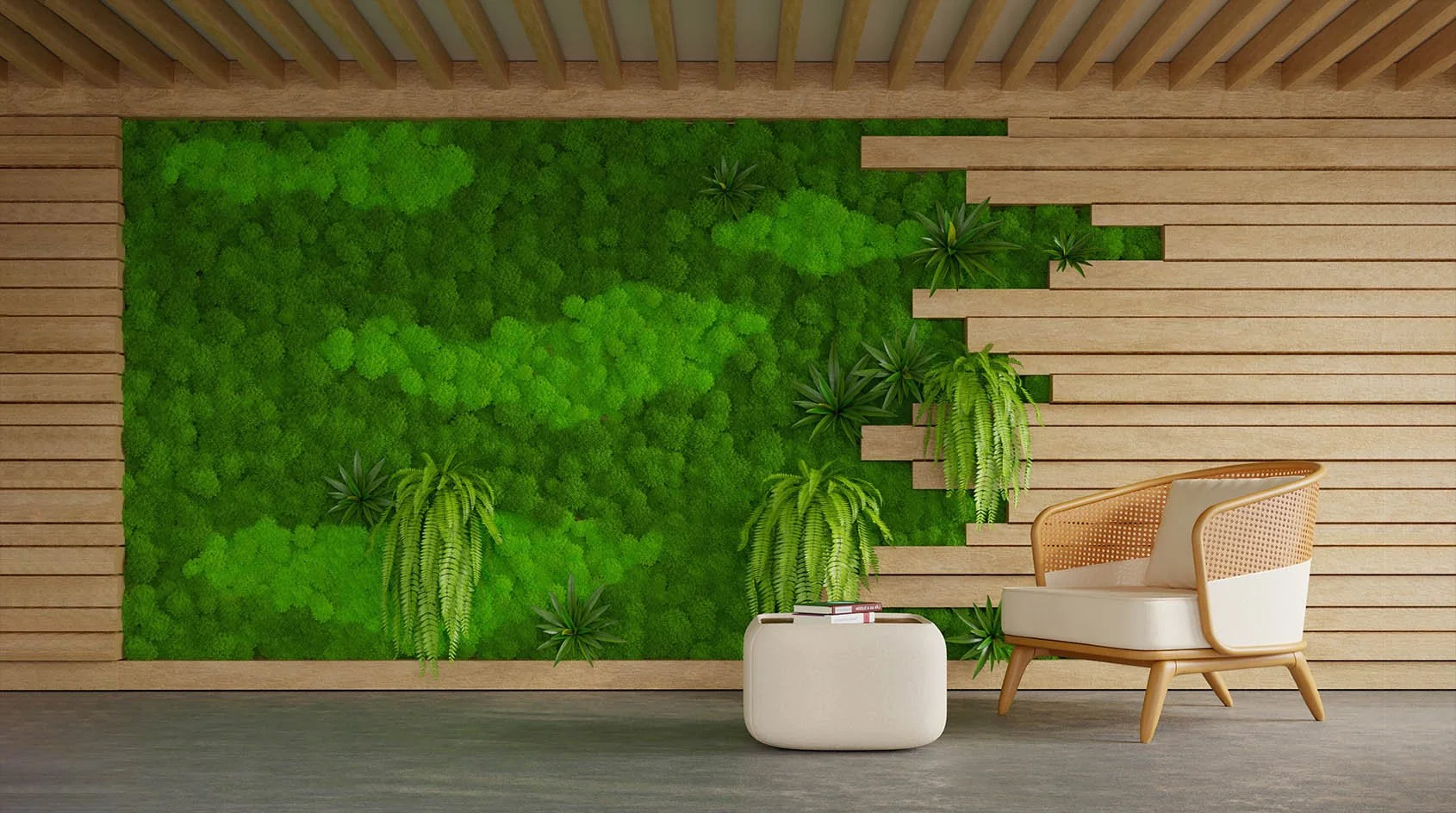
For 2026, preserved moss fits neatly into the broader move toward biophilic interiors, natural textures, warmer materials, and what some designers are calling biophilic luxury: nature-inspired elements used with restraint rather than simply filling a room with plants.
And you don't need a giant commercial green wall to get the effect. A framed panel measuring roughly 40 × 60 cm (16 × 24 inches) can be enough to create a strong focal point.
The trick is choosing the right moss and treating it like artwork—not like a houseplant.
First, choose preserved moss—not living moss
This distinction changes the entire project.
Preserved moss is not a living plant.
Commercial preserved moss is typically treated so its natural moisture is replaced or stabilized with a preservation solution, allowing it to retain a soft, natural appearance without soil, irrigation, or sunlight. Reindeer moss, flat moss, bun moss, and mood moss are commonly used for decorative installations.
That makes preserved moss particularly practical for wall art.
You don't need to build a miniature ecosystem behind the frame. No drainage tray. No grow light. No daily misting.
If you buy dried craft moss that is actually still viable, that's a different project entirely.
For this tutorial, use commercial preserved decorative moss.
What kind looks best?
For a polished 2026-style look, I'd combine textures rather than covering the entire panel with one identical moss.
Try:
Reindeer moss: rounded, fluffy texture and strong visual volume
Flat/sheet moss: darker, carpet-like areas
Mood moss: larger irregular clumps for depth
Bun or ball moss: small sculptural accents
The result looks much more expensive when the surface has variation.
Think landscape painting.
Not green carpet.
Your DIY moss wall art shopping list
You don't need a workshop full of equipment.
For one medium-sized framed panel, gather:
Material | Practical choice |
|---|---|
Backing board | 6–12 mm plywood, MDF, or rigid craft board |
Frame | 40 × 60 cm or similar picture frame |
Preserved moss | About 500–1,000 g depending on thickness |
Adhesive | Strong craft adhesive or hot-melt glue |
Glue gun | Standard high-temperature craft model |
Scissors | Sharp household or floral scissors |
Small brush | For positioning and cleaning |
Pencil | For marking the composition |
Disposable gloves | Useful because dyed moss can transfer pigment |
Hanging hardware | D-rings or appropriate picture hooks |
The exact moss quantity varies dramatically because a fluffy clump occupies much more volume than flat sheet moss.
Don't buy by weight alone. Buy by the visual coverage the supplier specifies.
Some preserved moss products are also dyed, and pigment transfer can occur, particularly under humid conditions, so gloves are a sensible little precaution while you're building the panel.
Build the composition before touching the glue
This is where many DIY versions go wrong.
Someone opens the moss bag, grabs the glue gun, and starts sticking pieces wherever there happens to be an empty spot.
Five minutes later: chaos.
Instead, put the bare backing board on a table and arrange the moss without adhesive.
Start with three visual zones.
Base: darker, flatter moss.
Middle: medium-height moss.
Accent: a few large, irregular pieces that project outward.
You can also leave tiny areas of exposed backing if you're creating a deliberately sculptural composition. A narrow strip of walnut-colored wood, black backing, or warm neutral paint can make the green appear richer.
For a particularly sophisticated look, try an 80/15/5 distribution:
80% dominant moss texture
15% secondary texture or color
5% accent material
Those numbers aren't a design law. They're simply a useful starting point.
The goal is restraint.
Step 1: Prepare the backing
Cut your board to fit the frame or buy a precut panel that matches its internal dimensions.
If you're using MDF or plywood, lightly sand rough edges before assembling anything. You want the moss to cover the face, not compensate for a badly finished board.
A dark backing is especially forgiving because tiny gaps between moss pieces become shadows rather than obvious pale patches.
Before gluing, mark a few loose boundaries with pencil.
Don't draw a complicated pattern. Just establish where your major masses will sit.
Step 2: Glue the largest pieces first
Start with the biggest moss clusters.
Apply adhesive to the backing rather than soaking the moss itself.
Hot-melt glue works well for small decorative panels because it grabs quickly, but there's an annoying side effect: you have very little repositioning time.
So don't glue an entire 40 × 60 cm panel at once.
Work in sections roughly the size of your hand.
Press the moss into place, hold it briefly, then move on.
For heavier pieces, use a stronger compatible craft adhesive and follow its curing instructions. The backing material matters here too; an adhesive that behaves beautifully on plywood may perform differently on painted MDF.
And keep the glue away from the visible tips.
Nobody wants a shiny plastic blob hiding inside a supposedly natural piece of wall art.
Step 3: Fill the awkward gaps
Once the major shapes are attached, stand back.
Actually stand back.
Look at the piece from two or three metres away. A gap that looks enormous on your worktable may disappear completely once the artwork is hanging on the wall.
Use smaller moss fragments to correct obvious holes.
Don't make the edges perfectly uniform, either. Slightly irregular boundaries are part of the appeal.
If everything ends in a mathematically straight line, the piece can start looking like an artificial turf sample.
Step 4: Add one luxury material
This is the little trick that pushes the project toward the bio-luxe aesthetic.
Combine moss with one contrasting natural material.
Good options include:
Walnut or oak veneer
Travertine-look ceramic accents
Natural cork
Small pieces of untreated wood
Warm brushed-metal details
Neutral linen or canvas behind selected sections
You don't need much.
A few narrow wood elements running through the moss can look far more sophisticated than covering every square centimetre in greenery.
This reflects a broader 2026 interior direction toward natural materials, tactile surfaces, earthy greens, warm woods, and interiors that feel collected rather than overly sterile.
Step 5: Frame it like artwork
The frame matters more than people expect.
A thin black frame gives preserved moss a contemporary gallery feel. Natural oak or walnut pushes it toward Scandinavian or organic-modern interiors. A thicker dark frame makes the moss feel more dramatic.
For a small apartment, a 40 × 60 cm portrait panel works beautifully beside a console, reading chair, or narrow entryway.
For a larger wall, don't automatically scale one panel to enormous proportions.
Three coordinated panels can be more interesting.
Try three 30 × 40 cm frames with slightly different moss compositions. Leave a consistent gap between them. Suddenly, the installation reads as a curated art collection rather than a DIY craft project.
Where should you hang it?
Preserved moss has one major advantage over living greenery: it doesn't need sunlight to survive.
That means a darker hallway or north-facing wall can work surprisingly well.
But there are limits.
Keep the artwork away from prolonged direct sunlight because UV exposure can fade natural pigments and dyes. Avoid radiators, fireplaces, heat sources, and strong HVAC airflow as well. Manufacturers commonly recommend indoor relative humidity around 40–60%, with some products specifying an even narrower ideal range such as 50–55%.
A small digital hygrometer costs little and can tell you whether the room is routinely drifting outside that range.
Avoid the bathroom mistake
A preserved moss panel may look fantastic in a bathroom photograph.
That doesn't automatically make the bathroom a good location.
Repeated exposure to steam and excessive humidity can damage preserved moss, particularly in poorly ventilated spaces.
A well-ventilated powder room might be different from a tiny bathroom where hot showers turn the entire room into a steam box.
Use common sense here.
The biggest moss-wall mistake: watering it
Don't mist preserved moss.
Not occasionally. Not "just a little." Not because it looks dry.
Preserved moss doesn't need water to remain alive because it isn't alive anymore. Adding water can interfere with the preservation treatment, encourage dye transfer, damage the backing, and create conditions where mold becomes a problem.
If the moss feels firmer than it did when you installed it, check the room's humidity before doing anything else.
A humidifier can improve the room's ambient conditions if the air is genuinely too dry, but don't aim its mist directly at the artwork.
That's an easy mistake to make.
How to keep DIY moss wall art looking good
Maintenance is almost boring.
That's the point.
Keep it indoors. Keep it away from direct sun. Don't spray it. Don't constantly touch it.
For dust, use a very soft brush or cool, gentle airflow. Several preserved-moss care guides recommend soft dry cleaning rather than wet cleaning.
If a section eventually becomes loose, remove the damaged material and glue a replacement piece into the same area.
Don't try to "revive" preserved moss with water.
It isn't thirsty.
A smarter 2026 styling formula
If your room already has plenty of plants, don't make the moss wall another giant green object competing for attention.
Instead, build a nature-meets-luxury palette:
Moss green + walnut + warm white + stone + soft black.
That combination works especially well with limewash-style walls, travertine-inspired surfaces, linen upholstery, warm wood furniture, and soft ambient lighting.
For a more dramatic room, use deeper olive or forest-green moss against charcoal walls.
For a small bright room, pair lighter moss with pale oak and creamy neutrals.
The artwork becomes a texture layer rather than simply "the green thing on the wall."
And that's where the bio-luxe idea really works.
FAQs
Is preserved moss actually alive?
No. Preserved decorative moss has been treated to maintain its appearance and texture after harvesting. It doesn't grow, require soil, or need watering.
Can I make moss wall art with live moss?
Technically, yes, but that's a completely different project. Live moss requires appropriate moisture, light, airflow, and ongoing care. A simple framed artwork is much easier with preserved moss.
Does preserved moss clean the air?
Don't buy it for that reason. Preserved moss is no longer metabolically active, so claims that a preserved panel functions like a living air-purifying plant are misleading.
How long does preserved moss wall art last?
Its lifespan depends heavily on the product, environment, light exposure, humidity, and handling. Quality preserved installations can remain attractive for years when kept indoors under suitable conditions, but fading and texture changes can eventually occur.
Can I put a moss wall above a heater?
It's better not to. Heat sources can dry the moss and shorten its visual life. Choose a stable indoor location away from radiators, fireplaces, heating equipment, and harsh HVAC airflow.
Give the wall one final look before you hang it
Hold the finished piece against the wall before installing the hardware.
Check it in daylight. Then check it under your evening lights.
You may notice that one oversized clump is pulling too much attention or that a section needs another darker patch. Fix those details now. Once it's mounted, small changes become considerably more annoying.
The best DIY moss wall art doesn't look like someone followed a craft template.
It looks collected.
A little imperfect. Textured. Quietly expensive.
And if you're chasing the 2026 bio-luxe look without turning your home into a greenhouse, that balance is exactly the point.
DIY moss wall art
bio-luxe home trend
moss wall decor
room decor ideas
natural wall art
Found this helpful? Share it!