
DIY Patio Decor Ideas for Small Outdoor Spaces
346 views
A small patio can become unusable surprisingly fast. Add two chairs, a little table, three plant pots, and suddenly there’s nowhere left to put your feet.
That’s the frustrating part of decorating a compact outdoor space: the problem usually isn’t a lack of ideas. It’s choosing ideas that consume too much floor area.
The better approach is to decorate upward, inward, and with purpose. A narrow wall can become a garden. A folding chair can disappear when you need room. A plain concrete floor can look completely different with one outdoor rug and a carefully positioned planter.
Here are practical DIY patio decor ideas that work especially well when every square foot matters.
Start With the Patio You Actually Have
Before buying anything, measure the usable floor area.
Not approximately. Actually measure it.
Write down the patio's length and width, then mark the position of doors, steps, railings, drains, outdoor outlets, and anything else that can't move. A patio measuring 8 × 10 feet gives you only 80 square feet, and a doorway can make that usable area feel considerably smaller.
Try this simple trick: use painter's tape to outline proposed furniture directly on the floor.
You'll notice problems immediately.
A chair that looked perfectly compact online may block the door when placed in its real position. A coffee table might leave only a narrow passage. That little mistake can cost more than the furniture itself if you have to return everything.
For a small patio, prioritize clear walking space before decoration. The prettiest arrangement isn't useful if you have to squeeze sideways to reach the door.
Turn a Blank Wall Into the Main Attraction
Floor space is expensive. Walls are free.
That's why vertical decorating is one of the strongest strategies for a compact patio. Current small-space garden advice increasingly emphasizes trellises, wall planters, hanging containers, and tiered displays because they add greenery without covering the floor.
A basic DIY vertical garden can be made with:
A wooden trellis
Small outdoor planters
S-hooks or suitable mounting hardware
Weather-resistant screws
Herbs, trailing plants, or compact flowers
Mount the trellis against a wall or sturdy fence and stagger the plants rather than arranging everything in a straight grid.
The result feels more like a designed feature than a collection of pots.
For renters, a freestanding ladder shelf can accomplish something similar without permanently attaching anything to the wall. Just make sure the shelf is stable enough for outdoor conditions and won't become a hazard during strong wind.
Build a Tiny Folding Patio Table
A conventional outdoor table can eat up an astonishing amount of room.
A wall-mounted folding table is different.
A simple DIY version can use a finished wood panel, two folding brackets, exterior-rated screws, and suitable outdoor paint or sealant. When you need somewhere to eat, work, or put drinks, fold it down. When you need the floor back, fold it against the wall.
Keep the tabletop relatively shallow. You don't need a dining-room-sized surface for two coffee cups and a laptop.
There's another advantage: the wall becomes part of the design. Paint the tabletop a color that relates to your cushions, planters, or exterior trim, and the practical feature starts looking intentional.
Small patios reward furniture that disappears.
Give Old Furniture a Second Life
DIY doesn't have to mean building everything from raw lumber.
An old wooden chair, stool, crate, or narrow bench can become useful patio decor with a little cleaning and suitable exterior finishing.
Sand rough surfaces, repair loose joints, and use a coating designed for outdoor exposure. Don't simply grab leftover indoor paint because the color looks right. Outdoor furniture faces moisture, temperature swings, sunlight, and repeated wet-dry cycles that interior finishes aren't designed to handle.
A wooden crate can become a compact side table. An old stool can become a plant stand. A narrow bench can provide seating without the visual bulk of a sectional sofa.
Just keep proportions under control.
A giant reclaimed object isn't automatically a clever small-space solution.
Create a Layered Plant Corner
One of the easiest ways to make a tiny patio feel alive is to stop thinking of plants as individual decorations.
Think in layers.
Place one taller plant toward the back, medium-height containers beside it, and a few trailing plants near the front. This creates depth without requiring a huge collection of pots.
Use vertical stands, wall-mounted planters, railing planters where permitted, and hanging baskets to keep the floor relatively open.
You can also make a compact herb station with basil, mint, thyme, rosemary, or other plants appropriate for your climate and available sunlight.
Watch the sunlight first, though.
A beautiful arrangement can fail simply because the patio receives less direct light than expected. Check the space at different times of day before choosing plants, especially if a neighboring building, balcony, tree, or privacy wall casts afternoon shade.
Make One Outdoor Rug Do the Heavy Lifting
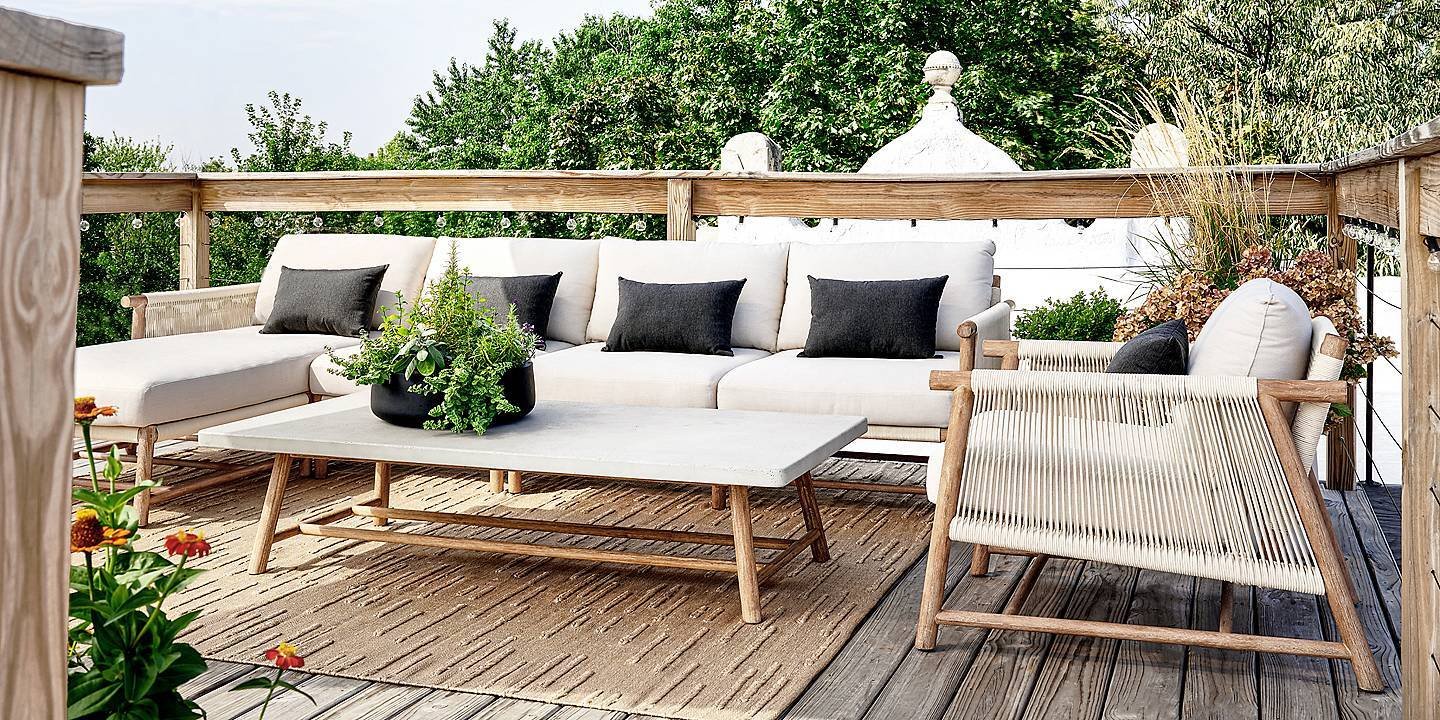
An outdoor rug can visually define a seating area without constructing anything.
That matters because small patios often look messy when every object seems to float independently.
Put a weather-appropriate rug beneath two chairs and a small table, and suddenly that group reads as one intentional zone.
Choose the size carefully. A rug that's too large can make the patio feel crowded, while one that's tiny enough to sit under only the coffee table can look disconnected.
Patterns can work surprisingly well in small spaces, but don't combine a loud rug with five competing cushion patterns. Pick one visual focal point and let the other pieces support it.
Use Mirrors Carefully
A weather-suitable mirror can make a compact patio appear brighter and visually deeper.
The trick is placement.
Instead of hanging a mirror directly opposite a blank wall, use it to reflect greenery, daylight, or an attractive part of the patio. A reflection of a fence or utility equipment won't create quite the same effect.
For DIY projects, an old framed mirror can be repurposed, but make sure its construction and mounting method are appropriate for outdoor exposure. Ordinary interior mirrors and frames may deteriorate quickly in humid or wet conditions.
In a covered patio, protected placement makes a big difference.
Add Lighting Without Turning the Patio Into a Stadium
Good lighting changes a small patio dramatically after sunset.
String lights are the obvious DIY choice, but placement matters more than quantity. Run a single strand around the perimeter, above a seating area, or along a trellis rather than covering every available surface.
ENERGY STAR says certified decorative light strings use approximately 92% less energy than conventional incandescent strings, and certified outdoor models are tested for weathering.
LEDs also produce light efficiently and generally have long useful lives; ENERGY STAR notes that LED lifetime is typically based on when light output falls by about 30%, rather than the bulb suddenly burning out.
For a small patio, warm, low-level illumination usually feels better than extremely bright fixtures.
And don't forget cable management. Loose extension cords crossing a walkway are an accident waiting to happen.
Build a Privacy Screen That Doubles as Decor
If the patio faces a neighboring building, parking area, or busy walkway, privacy can be more valuable than another decorative object.
A narrow trellis is an excellent starting point.
Attach climbing plants where appropriate, or use the structure as a backdrop for hanging planters. You get privacy, greenery, and visual height from one feature.
Another DIY option is a slatted wood screen. Vertical slats create separation without making a tiny patio feel like a solid box.
Keep the screen proportionate to the space. A completely opaque wall can make a narrow patio feel enclosed, particularly if the area already receives limited sunlight.
Choose Furniture That Performs Two Jobs
Small patios benefit enormously from multifunctional pieces.
A storage bench can provide seating and hide cushions. A nesting table can provide extra surfaces when guests arrive, then tuck away afterward. Folding chairs can hang from a suitable wall-mounted storage system when they're not needed.
A compact patio doesn't necessarily need fewer things.
It needs fewer single-purpose things.
Before buying anything, ask: Can this piece solve another problem?
If the answer is yes, it's usually a better use of limited space.
Try a Three-Zone Layout
You don't need separate rooms to create different functions.
Divide the patio mentally into three zones:
Zone | Purpose | Small-space solution |
|---|---|---|
Seating | Relaxing or conversation | Two slim chairs or a narrow bench |
Greenery | Plants and visual interest | Vertical trellis or tiered stand |
Utility | Drinks, storage, lighting | Folding table or storage bench |
The zones don't have to be equal.
A 10 × 12-foot patio might devote most of its space to seating, while a tiny 6 × 8-foot patio could use one wall for plants and keep the center almost completely open.
That empty area isn't wasted.
It's what makes the patio comfortable.
Five Cheap DIY Upgrades That Look More Expensive
If the budget is tight, start with details rather than replacing everything.
Paint an old planter collection the same color. Different shapes suddenly look like a coordinated set.
Replace worn cushion covers. A new textile can change the appearance of existing furniture immediately.
Add hooks to an unused wall. Hang lanterns, small baskets, gardening tools, or folding chairs.
Build a narrow plant shelf. A vertical display provides much more planting space than scattered pots.
Refresh one focal wall. Exterior paint, a trellis, or carefully chosen outdoor artwork can make the entire patio feel newly designed.
You don't need a complete renovation.
Sometimes one strong visual change is enough.
Don't Forget Weather and Maintenance
This is where many attractive DIY patio projects go wrong.
Outdoor decor lives a harder life than indoor decor. Sunlight fades fabrics. Rain finds gaps. Metal rusts. Wood swells and contracts. Strong wind can turn a lightweight planter into a projectile.
Choose materials according to the conditions your patio actually experiences.
For exposed areas, use outdoor-rated fabrics, finishes, fasteners, lighting, and hardware. Keep drainage holes clear in containers, and avoid placing pots where water can collect against walls or furniture.
Lighting deserves particular attention. The U.S. Department of Energy's exterior-lighting guidance evaluates outdoor fixtures using metrics such as lumens per watt and references recognized IES testing methods.
You don't need to turn a DIY decorating project into an engineering exercise. Just don't treat indoor products as automatically suitable outdoors.
Small Patio Decor FAQs
What is the cheapest way to decorate a small patio?
Start with textiles, plants, lighting, and repurposed furniture. An outdoor rug, a few coordinated cushion covers, inexpensive planters, and one strand of LED lights can produce a noticeable change without replacing the entire furniture set.
How can I make a tiny patio look bigger?
Keep the center relatively open, use furniture with a small footprint, and move decoration onto walls and vertical structures. Light colors, a well-positioned mirror, and a rug that visually connects the seating area can also make the space feel more unified.
What furniture works best for a very small patio?
Folding chairs, narrow benches, nesting tables, and wall-mounted folding tables are particularly useful. Storage benches are excellent when you need seating and somewhere to keep cushions or gardening supplies.
How many plants should I put on a small patio?
There isn't a magic number. Start with a few plants at different heights rather than filling every corner immediately. Vertical planters and railing-mounted containers can increase planting capacity without sacrificing much floor space.
Are string lights safe to use outdoors?
Use lighting specifically rated for outdoor use and follow the manufacturer's installation instructions. ENERGY STAR notes that certified outdoor decorative light strings undergo weathering tests, making the outdoor rating an important detail when shopping.
Give the Patio One More Look Before You Buy Anything
The best small-patio makeover usually isn't the one with the most decorations.
It's the one where every object earns its place.
Measure the floor. Clear the walking route. Pick one focal point, then build around it with vertical greenery, flexible furniture, useful storage, and restrained lighting. If you're doing the work yourself, tackle one project at a time rather than buying everything on day one.
Start with the wall.
Then reclaim the floor.
DIY patio decor
small outdoor spaces
patio decorating ideas
outdoor room decor
budget patio makeover
Found this helpful? Share it!